

Article · The Journal
Yin and Yang Meaning: Balance as a Relationship, Not a Score
Published by FENG SHUI PERSONA
Yin and yang describe contrasting but related qualities within Chinese traditions. They should not be reduced to good versus bad. A room, a day or a personal routine contains changing relationships; calling one quality undesirable in every situation misses that context.
Start with a pair you can observe
Consider brightness and shade. A bright table may be useful for detailed work, while a softer corner may suit an evening conversation. Neither condition is automatically superior. The question is whether the arrangement fits the activity and the people using it.
Movement and stillness offer another useful comparison. A clear route supports movement through a home. A seat placed away from that route may support a pause. You do not need to label a person permanently as one side of the pair in order to notice the difference.
Look beyond the familiar black-and-white diagram
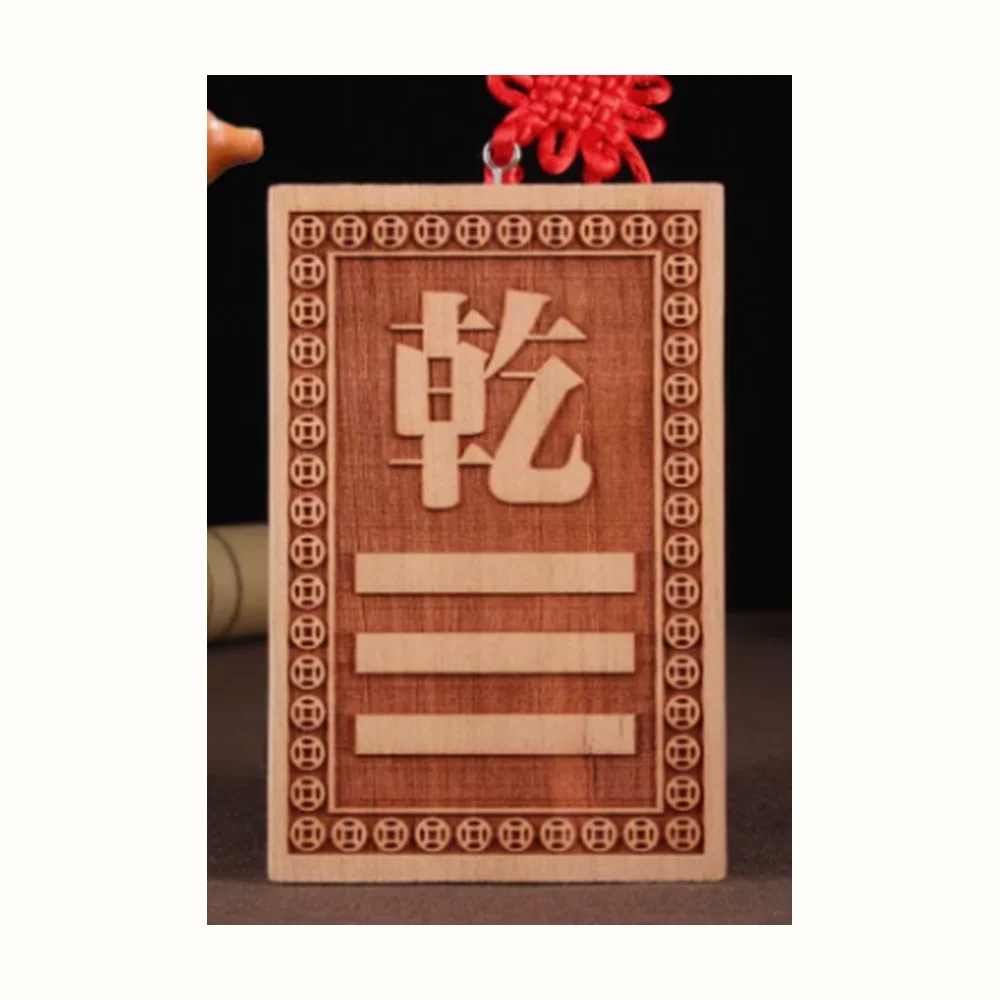
Broken and unbroken lines also express yin and yang in trigram symbolism. Museum objects show that these ideas have appeared in many forms and settings. Recognizing a symbol is a beginning; understanding the individual object still requires its name, history and context.
Do not assume that a diagram on a hanging item supplies a complete feng shui assessment. Ask what the maker calls the design and what guidance, if any, accompanies that exact object. Two arrangements that look similar may be discussed differently.
A simple observation exercise
Choose one room and write down what you want to do there at two different times of day. Notice where the current arrangement helps and where it gets in the way. Make one reversible adjustment, such as repositioning a lamp or removing an unnecessary item from a table.
Review the result after ordinary use. Describe the change in everyday terms: easier to read, less awkward to walk through, more comfortable to sit together. If you enjoy a symbolic piece in the space, let it add meaning rather than serve as proof that the room has achieved a measurable spiritual score.
Explore a related piece
Eight Trigram Directional Wood Hanging. Read the exact design, dimensions and preparation information on its product page before choosing. For questions about traditional meaning, contact Luoyong about a Taoist consultation.
Continue watching and reading
Find our available cultural shorts on Fengshui Master on YouTube and updates on our Facebook page. For another example of how everyday objects acquire symbolic meaning, see the seven-grains-of-rice video and explanation. That custom is one folk example, not a rule for all Taoist traditions.
Further cultural reading
The Metropolitan Museum of Art: an object incorporating eight-trigram symbolism. The historical reference supplies context; it does not endorse this shop or establish outcomes for a modern product.
Yin and yang describe contrasting qualities. For a different way to read the colors in a room, explore the five elements and their traditional colors.